Views and commands
The dashboard
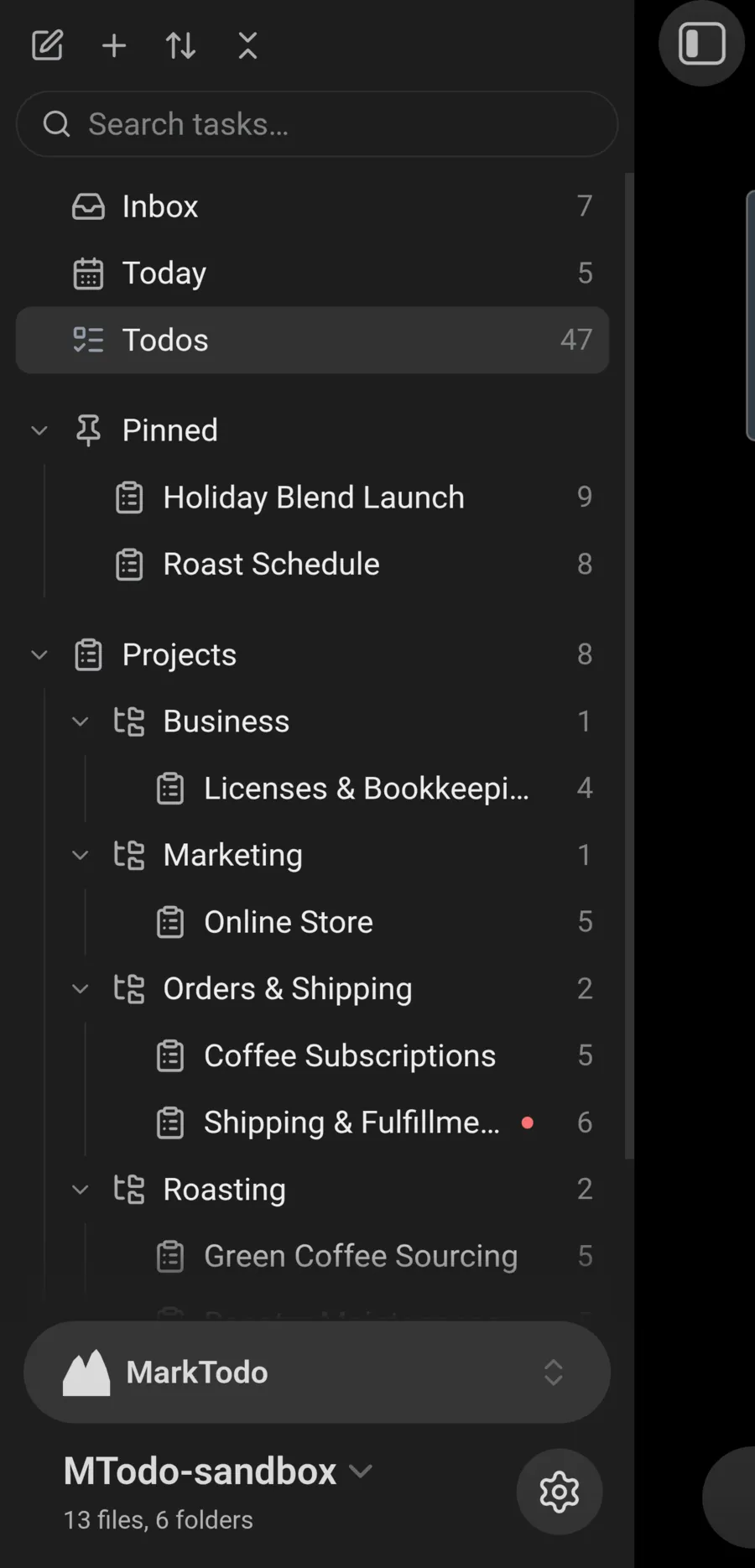
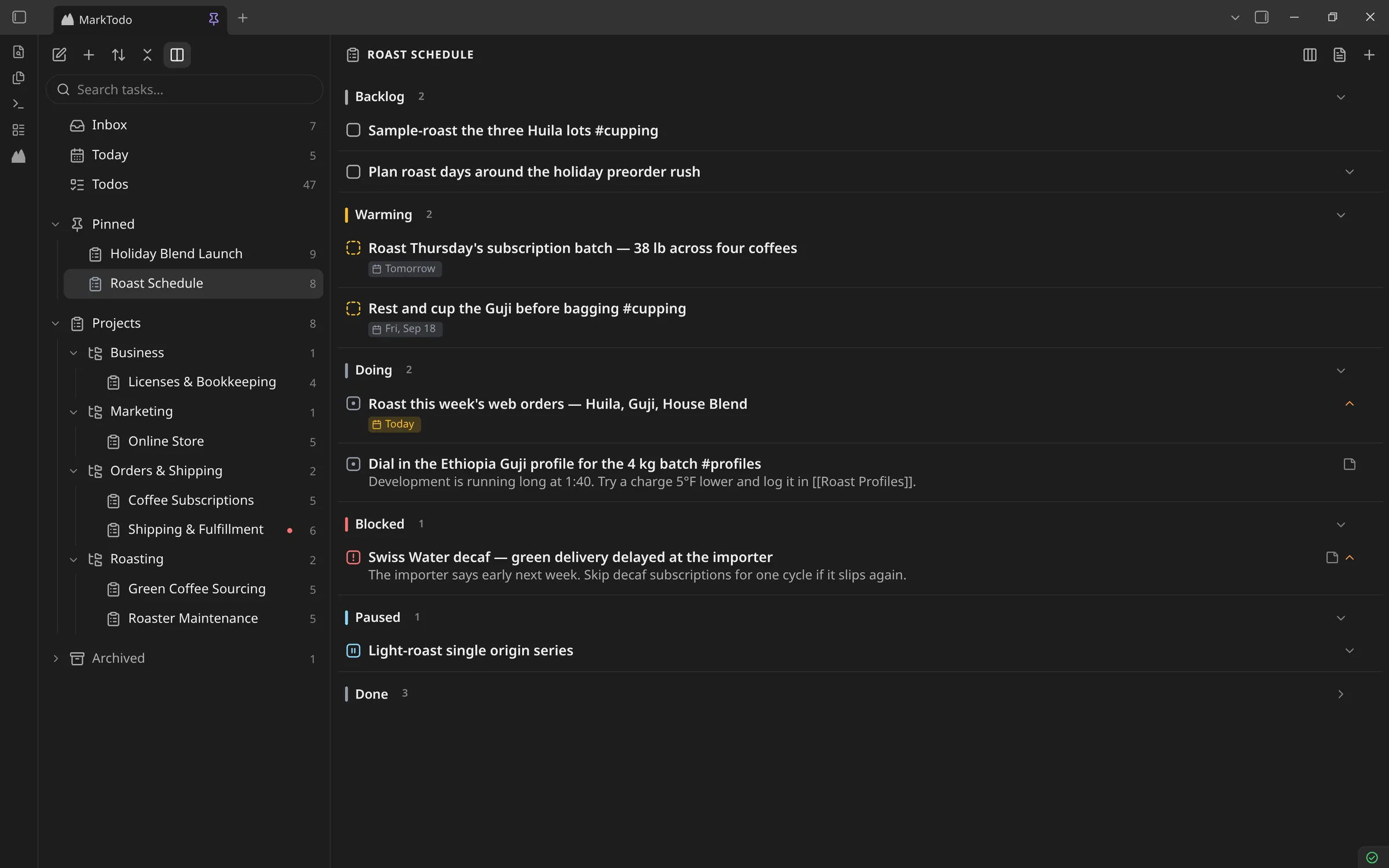
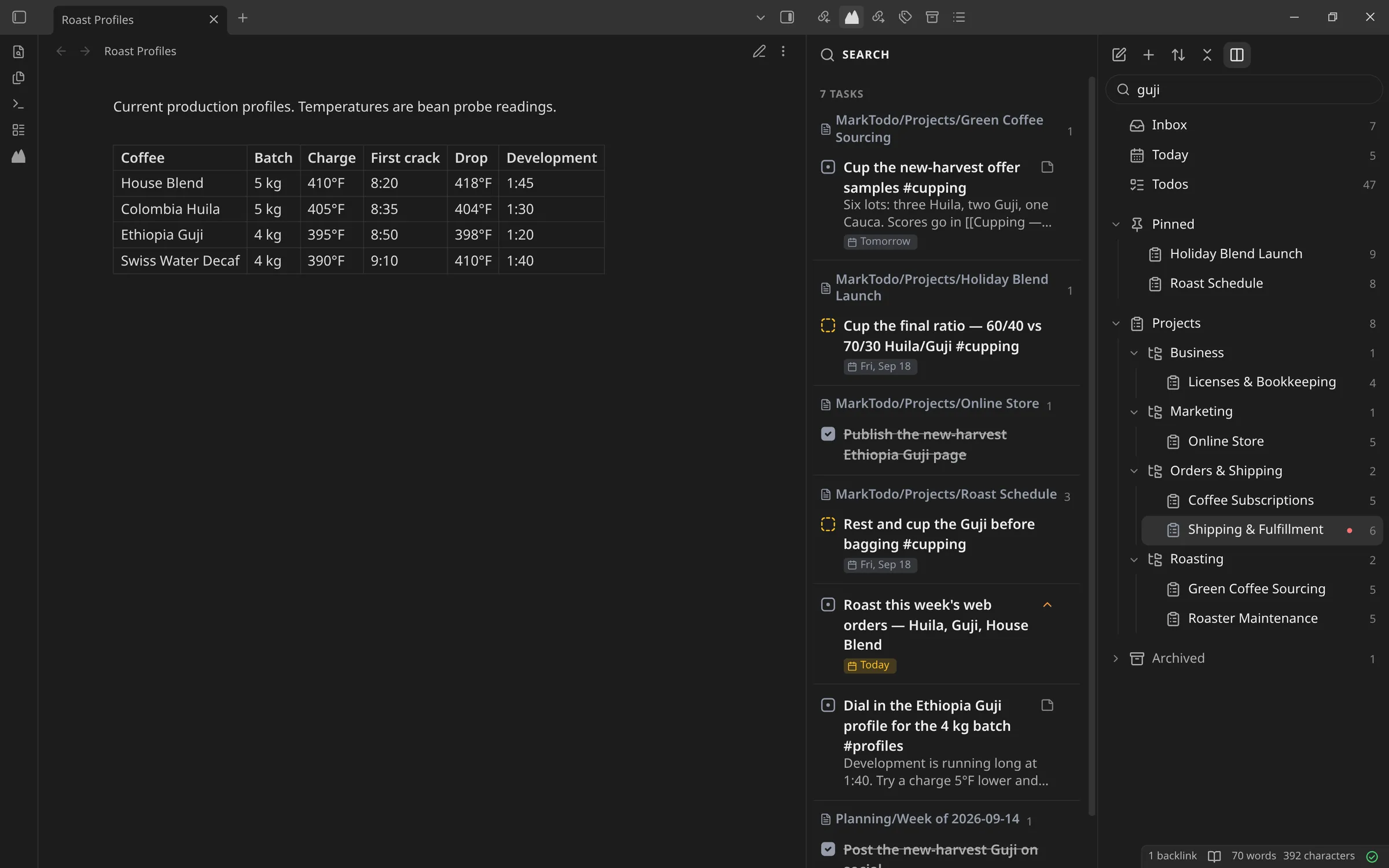
Section titled “The dashboard”Open it from the MarkTodo ribbon icon or the Open dashboard command. It has two columns, like Notebook Navigator:
- Navigation — Inbox, Today and Todos with their counts, then your pinned
projects and every project in a tree grouped by
marktodo-group, with Archived last. A search box at the top finds todos anywhere in the vault. A red dot means something in a project is overdue. - The list you picked — beside the navigation, with its filters and an add button. Lists show all six status sections with counts; click a section to fold it. Done starts folded.
Use a project’s … menu (or right-click) to pin it, move it to another group, archive it or open its note. A group’s … menu edits or deletes the group.
Layout
Section titled “Layout”In Settings → Layout:
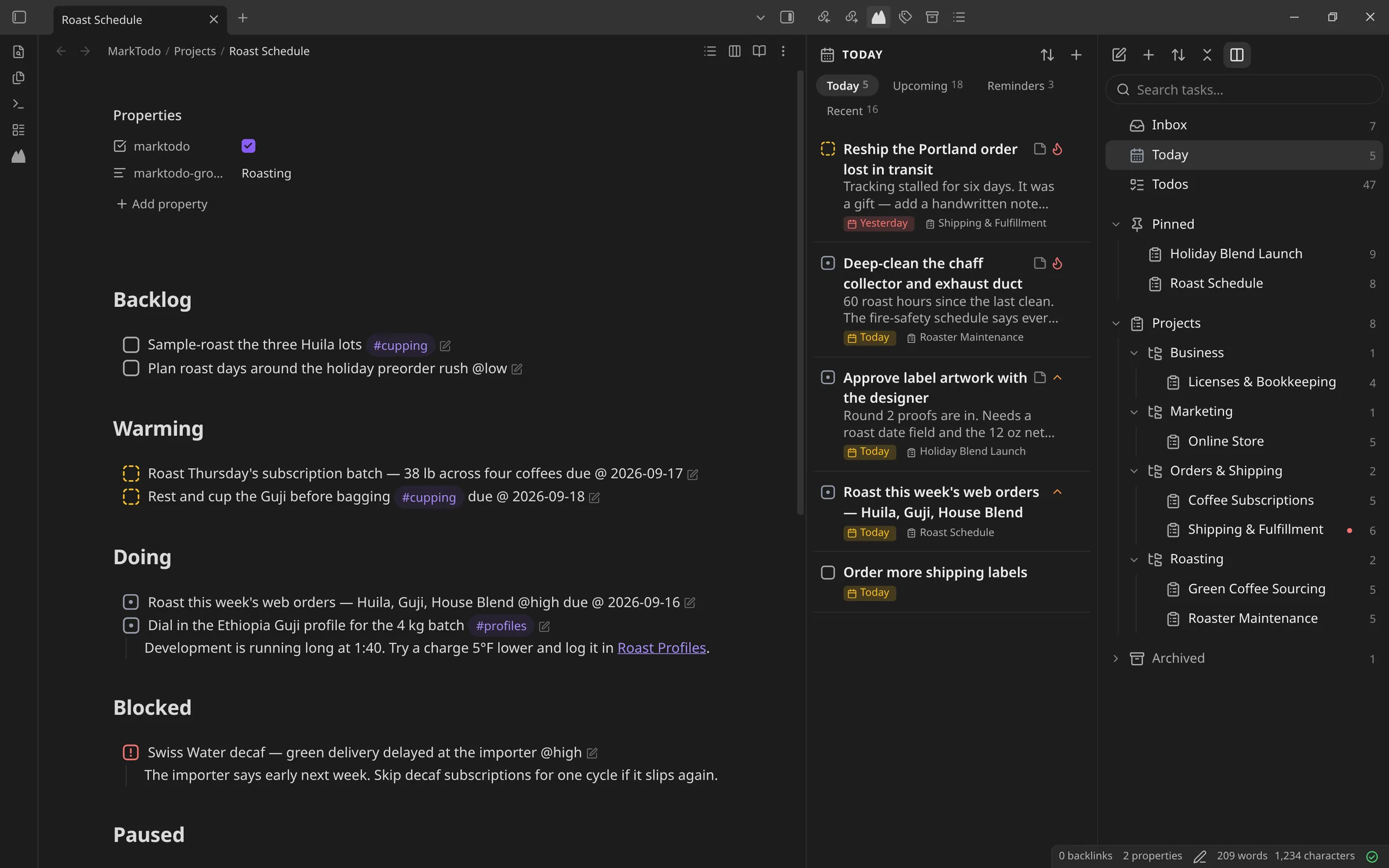
- Dashboard columns — one or two. With one column, picking something opens its list with a back button. Phones always use one column. The toolbar button and the Toggle one or two dashboard columns command switch it too.
- Navigation column side — left or right. Drag the divider to resize.
- Dashboard opens in — the right sidebar (the default), the left sidebar, or a pane in the main area, where it keeps a tab group to itself.
The lists
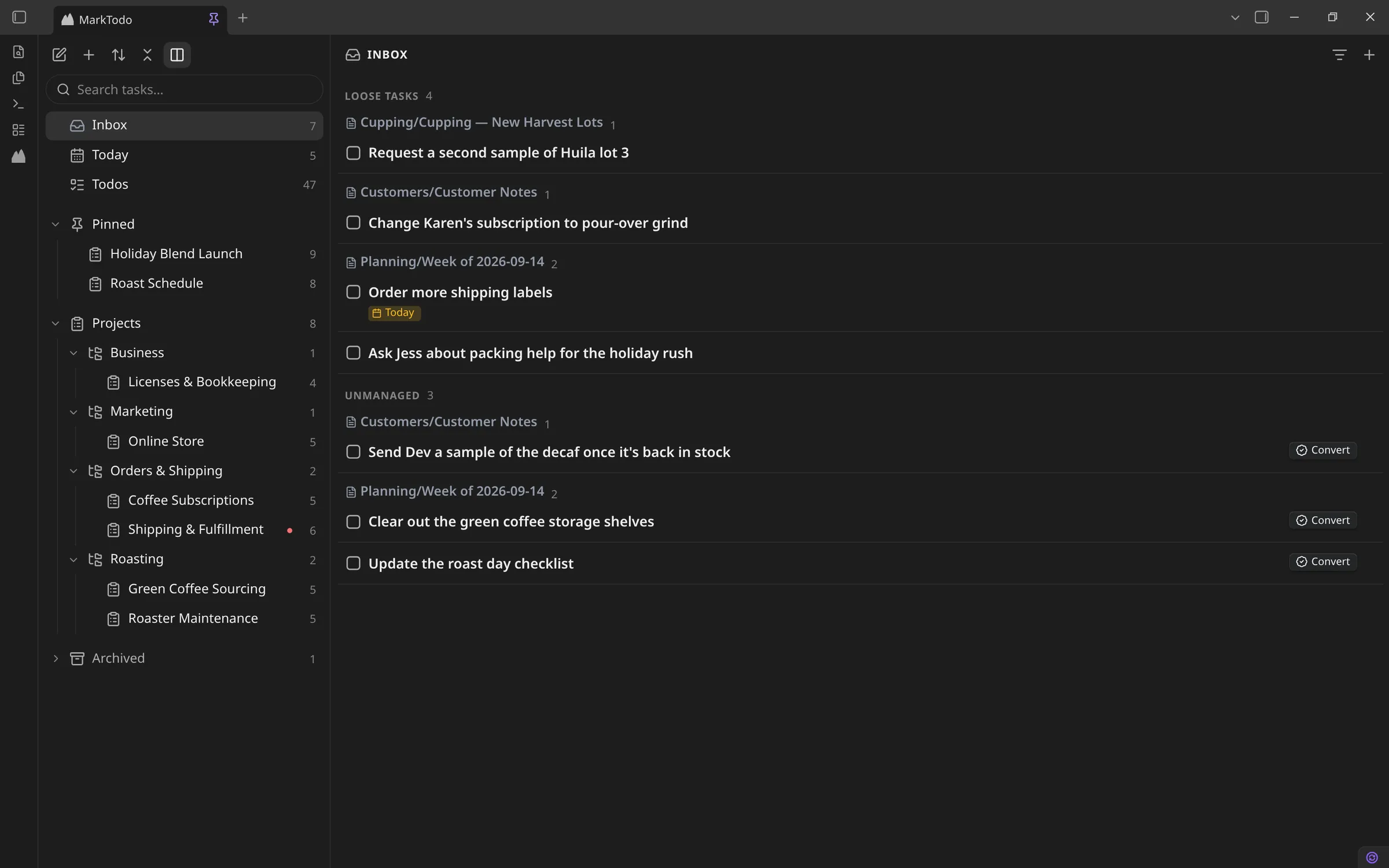
Section titled “The lists”- Inbox — every open todo outside a project, grouped by note. Turn on Show unmanaged checkboxes and each plain checkbox gets a one-click Convert.
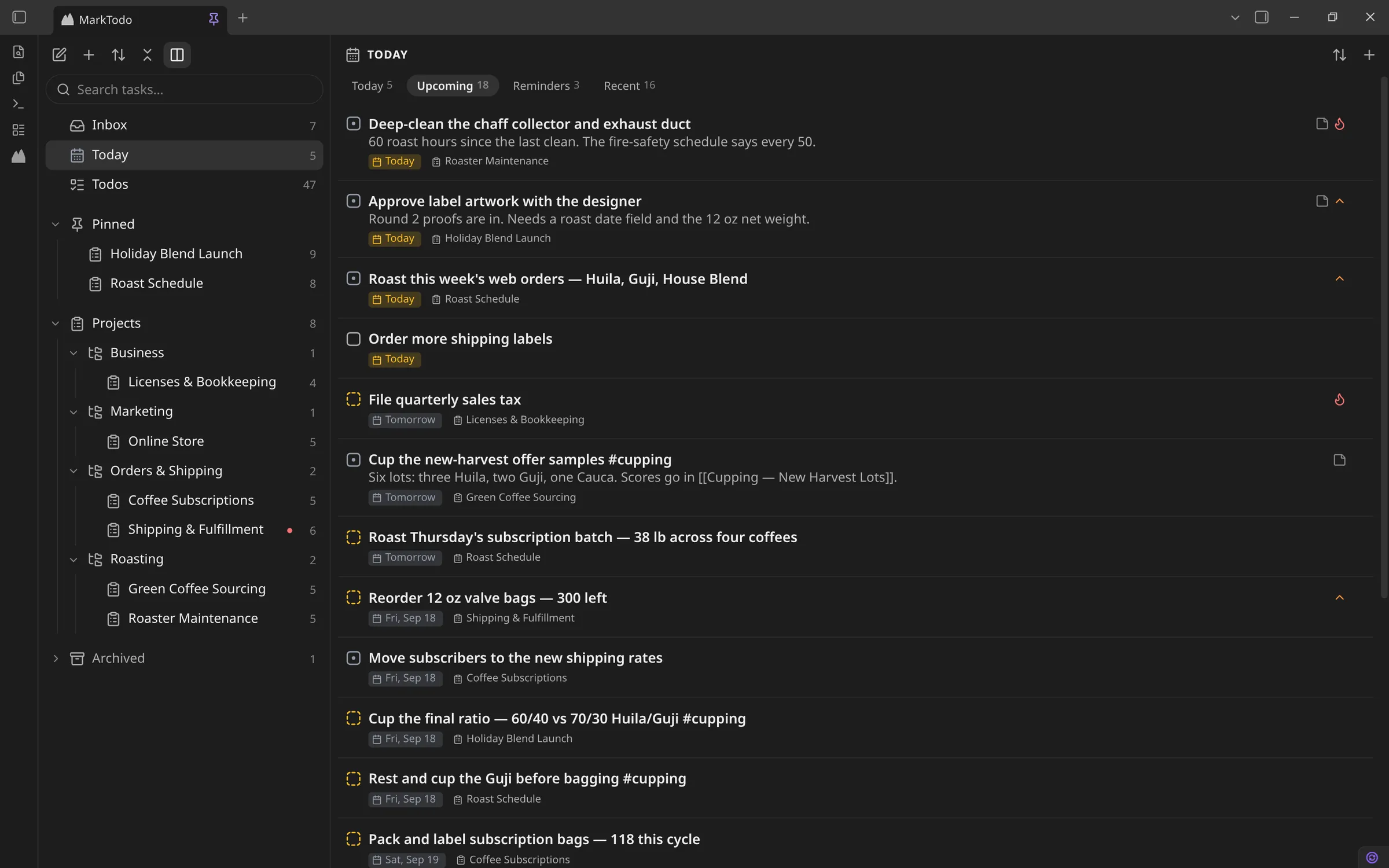
- Today — four segments across the whole vault: Today (due today or
earlier), Upcoming (the next week), Reminders (todos with a
notify @, which the Android app fires) and Recent (finished in the last week). Sort and group them by date, project, priority or status. - Todos — every project todo, with a collapsible filter bar (project, tag, priority, managed) that remembers your last filters.
Boards
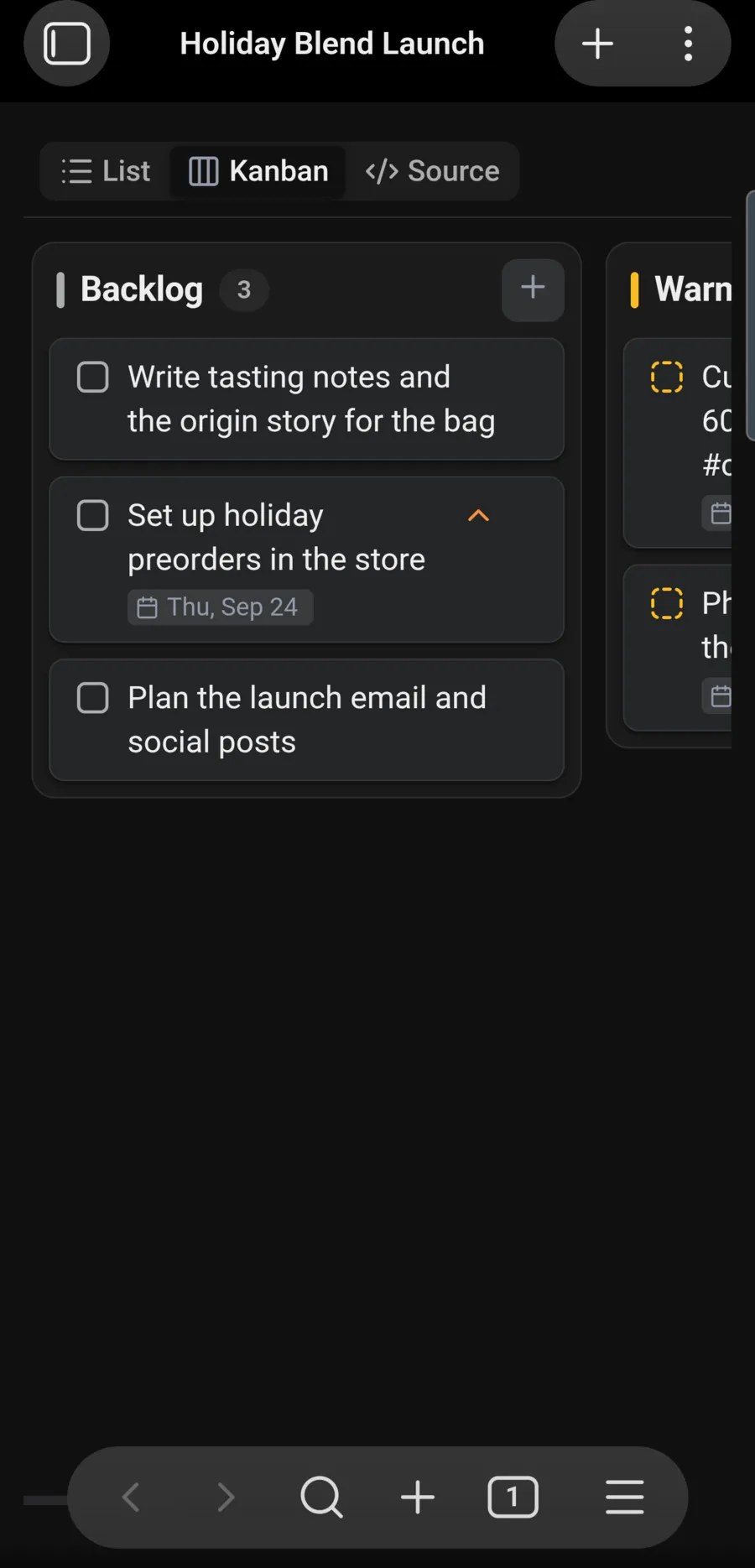
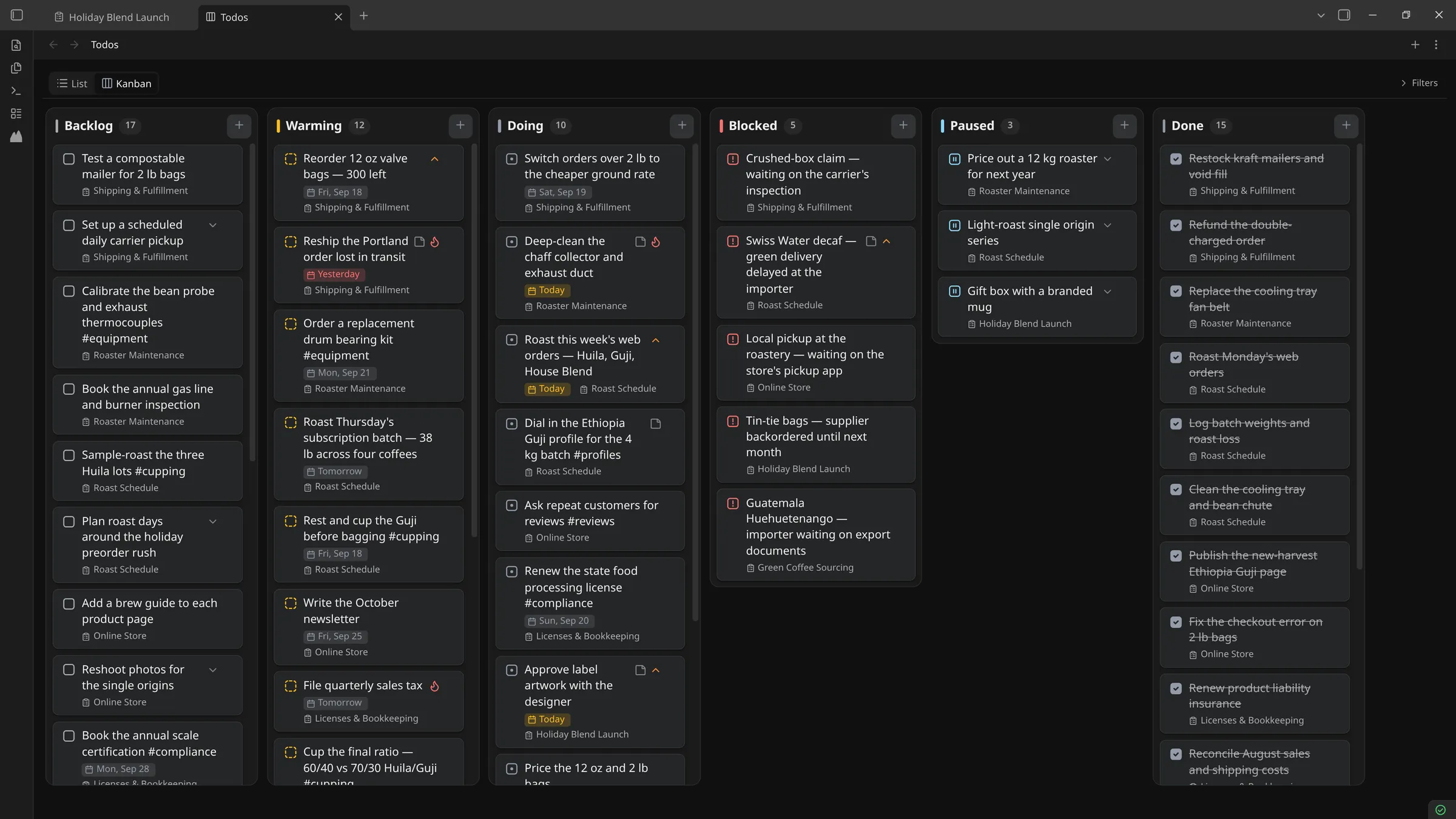
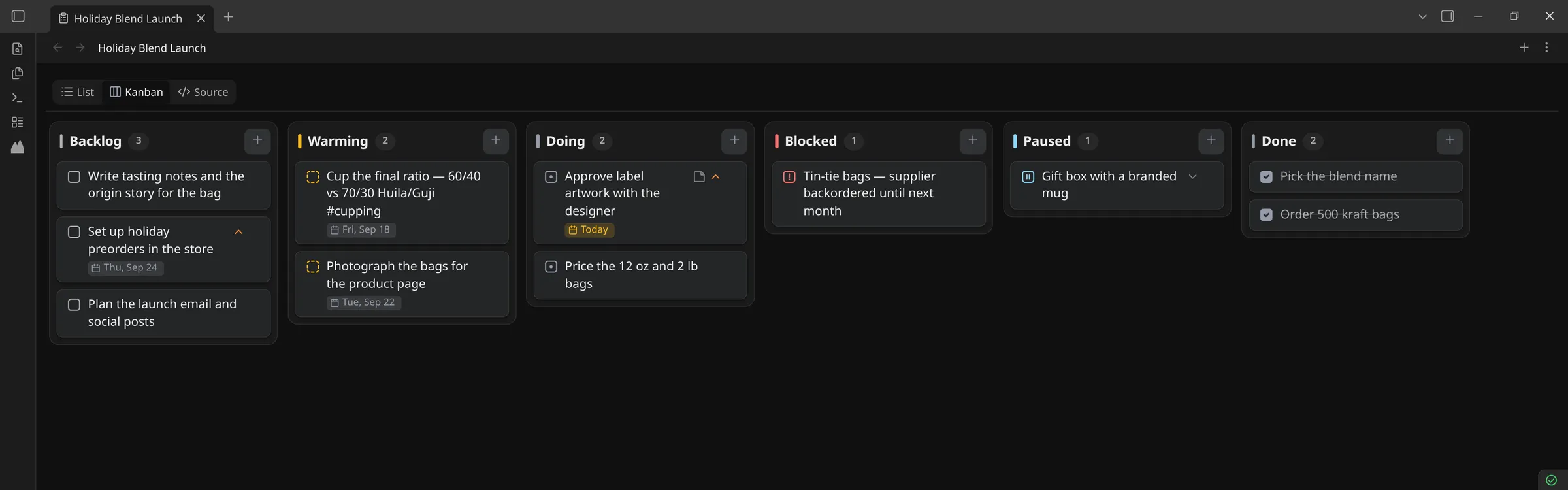
Section titled “Boards”A list’s header opens Todos or a project as a Kanban board in the main area. A board’s List switch goes back to the dashboard, and a project’s Source is its note, with List and Kanban buttons in the note’s header.
Drag a card within its column, or a todo within its list section, and the line moves in the note. Drop it on another status to change the status.
Capturing todos
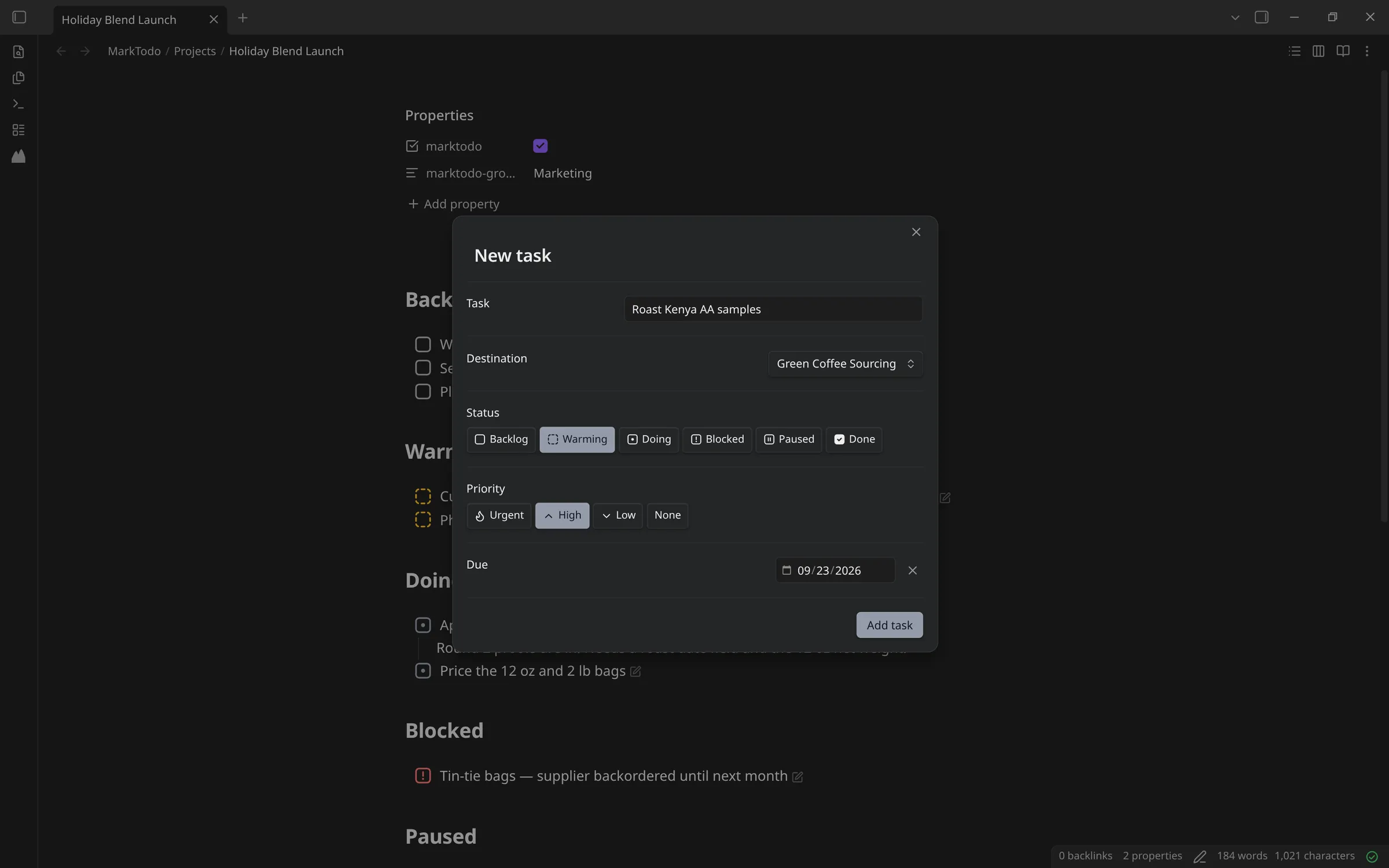
Section titled “Capturing todos”- Add todo… — one dialog: title, destination, status, priority and due date. The destination can be a project (the last one you used is preselected), today’s daily note, or your catch-all note.
- Keyword capture — type the trigger (
;tby default) at the end of any line and pick Create todo here or Open todo editor…, plus Send to… when a catch-all note is set. - Create project… and Convert note to MarkTodo project make a project.
Editing todos
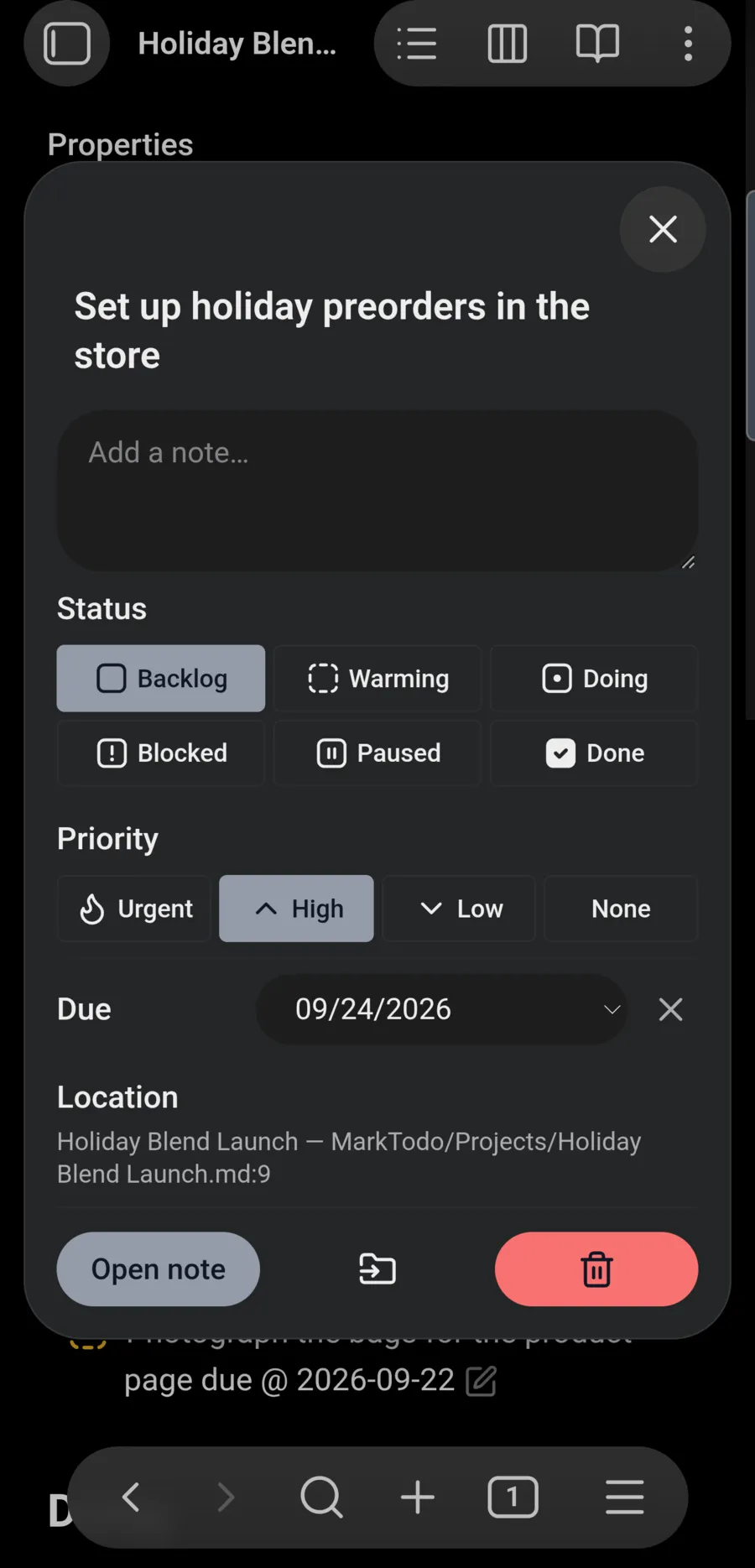
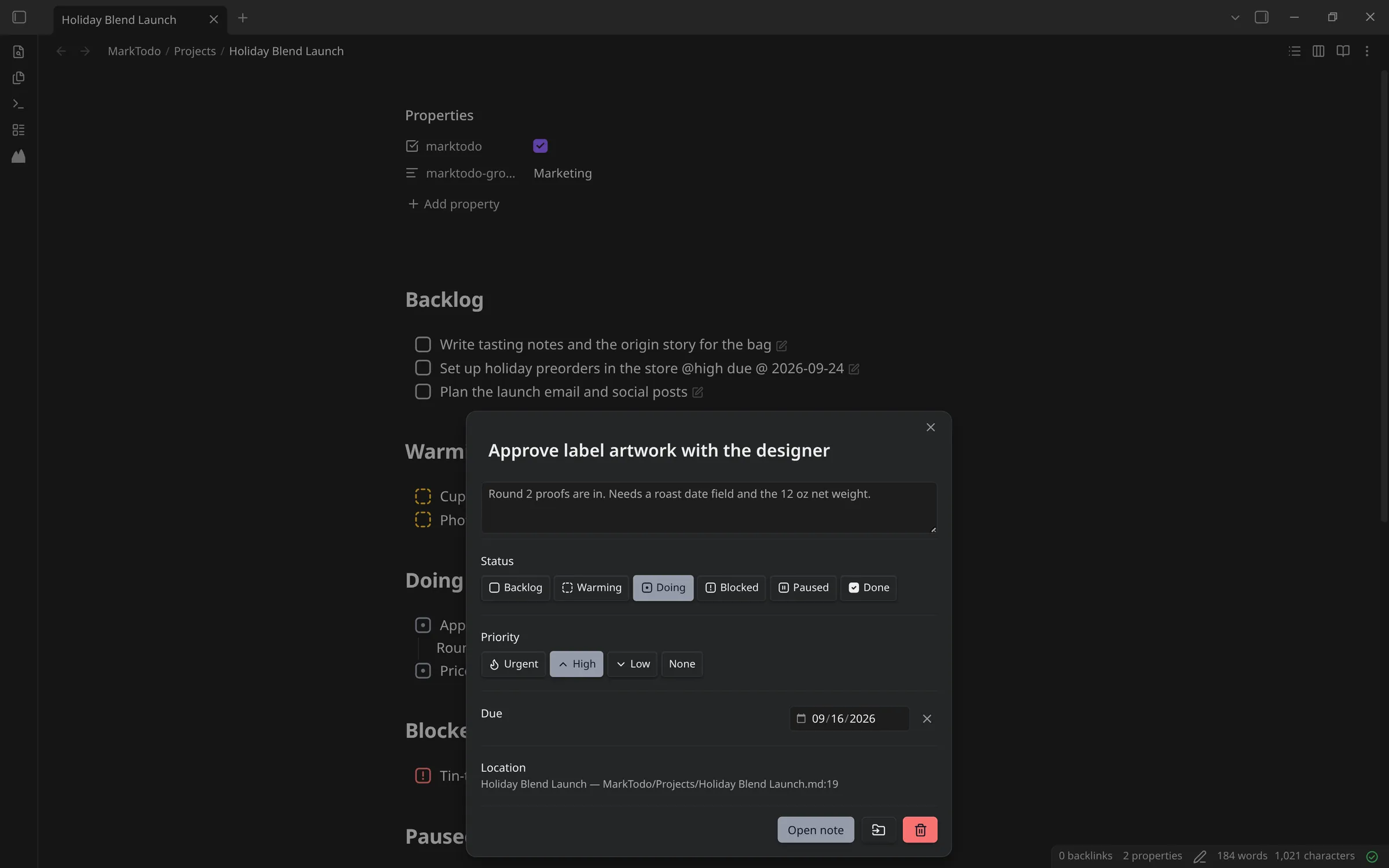
Section titled “Editing todos”- From the note — click the small edit icon at the end of a managed todo, in Live Preview or Reading view, or right-click → Edit MarkTodo todo. Edit todo at cursor can be bound to a hotkey.
- Rename a todo in the todo editor; its priority, due and done tokens stay where they are.
- Move to project relocates the whole line into another project note.
- Delete a todo from its status menu or the todo editor. MarkTodo asks first.
- Adopt all todos in current note gives every todo in the note an id at once; Convert current line to managed todo does one.
- Move completed todos to bottom tidies the current note.
On phones and tablets
Section titled “On phones and tablets”On a phone or tablet the plugin starts in Lightweight mode: your notes keep MarkTodo’s checkboxes and the todo trigger, and archived projects are still filed, but the todo index, dashboard and boards stay off so Obsidian stays quick. Settings → On this device switches between Lightweight and the full plugin, for that device only.
The first time it loads on a phone or tablet, the plugin shows one message inside its own interface pointing to the Android app, with a button to use the full plugin instead.
With the full plugin on, the dashboard, lists, boards and todo editor work on a phone too: